01. Introduction
Digital humanities projects have evolved far beyond simple online archives. What once started as digitized collections of texts or images has gradually transformed into something much more complex: dynamic, interconnected platforms where knowledge can be explored, navigated, and interpreted in new ways.
Institutions today are no longer asking how to publish content online. They are asking how to structure, connect, and present knowledge in ways that reflect the richness of their material. This shift has led to a new generation of digital humanities platforms. Systems that combine texts, maps, data, and media into unified, interactive environments.
Building these platforms, however, is not straightforward. It requires more than a CMS or a database. It requires architectural thinking, a deep understanding of research workflows, and the ability to translate complex humanities content into structured digital systems.
02. What defines a modern Digital Humanities project?
A modern digital humanities project is not simply a website. It is a structured knowledge system.
At its core, it brings together different types of content: texts, images, metadata, geographical information and connects them in meaningful ways. The goal is not just to display information, but to allow users to explore relationships between data points.
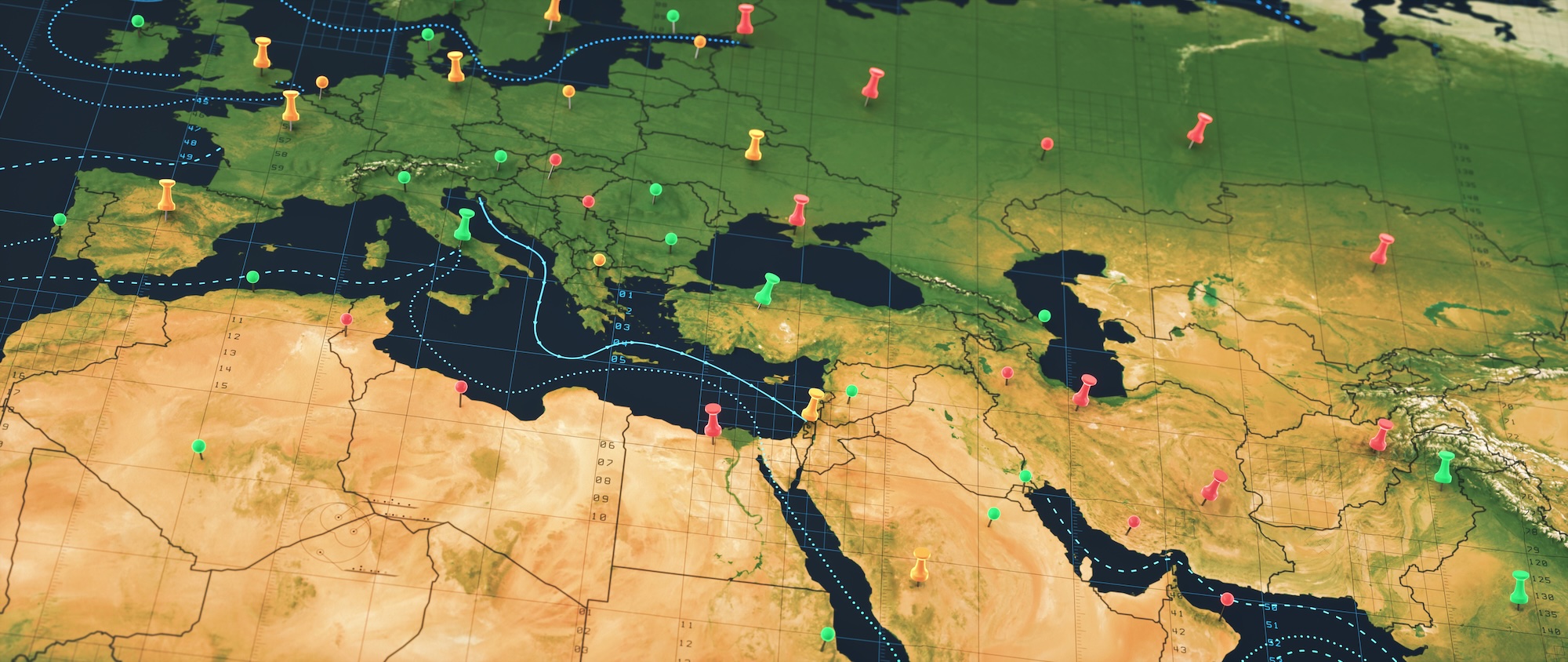
For example, a historical text might be linked to specific locations on a map. Those locations might connect to archaeological data, images, or other texts. Over time, these connections form a network of knowledge that users can navigate.
This is what distinguishes modern digital humanities platforms from traditional digital archives. They are not static repositories. They are interactive systems that support research, interpretation, and discovery.
03. Why are texts and maps so central to Digital Humanities?
One of the most powerful aspects of digital humanities is the ability to connect narrative with geography.
Texts often describe places, journeys, events, and relationships that are inherently spatial. When this information is linked to maps, it becomes possible to explore content in a completely different way. Users are no longer limited to reading linearly. They can move through information spatially, discovering connections based on location.
This creates a richer and more intuitive experience. A user studying an ancient text, for instance, can immediately see where events took place, how locations relate to each other, and how narratives unfold across geography.
The combination of text and map transforms passive reading into active exploration. It also opens new possibilities for research, allowing scholars to identify patterns and relationships that are difficult to see in purely textual formats.
This “nexus” between texts and maps has become a defining feature of many advanced digital humanities projects.
04. How do you structure Humanities Data for Digital Platforms?
One of the biggest challenges in digital humanities is structuring content in a way that remains flexible while preserving academic rigor.
Unlike typical web content, humanities data is inherently complex and layered. A single item can include multiple interpretations, references, sources, and contextual relationships that need to be preserved rather than simplified. When this type of content is forced into a standard CMS, it often leads to fragmentation, loss of meaning, or overly rigid structures that cannot support deeper connections.
Successful digital humanities platforms take a different approach. Instead of treating content as isolated entries, they rely on structured data models where information is organized into entities such as places, people, texts, and events, each connected through clearly defined relationships. In this context, metadata is not secondary — it becomes the foundation that allows knowledge to be structured, interpreted, and expanded over time.
This approach enables the system to understand not only what the content is, but how it relates to other pieces of information across the platform. As these relationships grow, the platform evolves into a network of interconnected knowledge rather than a collection of individual records.
To support this level of structure, repository systems like Omeka S are often used to manage and govern the data, while APIs expose it to external applications. This architecture allows institutions to build flexible frontends that present the same dataset in different ways, depending on the needs of researchers, scholars, or the general public.
The result is a platform that is both structured and adaptable, capable of supporting long-term research while remaining flexible enough to evolve with new requirements.
05. Why are APIs and Repositories essential in Digital Humanities?
As digital humanities projects grow in scale and complexity, the separation between data and presentation becomes increasingly important.
A repository acts as the core system where structured data is stored, managed, and preserved over time. It ensures that information remains consistent, governed, and accessible, which is particularly critical for long-term academic and research projects where data integrity and traceability cannot be compromised. In this context, the repository is not just a storage layer — it becomes the foundation of the entire digital platform.
APIs extend this foundation by allowing data to be accessed and reused across different applications. Instead of being tied to a single interface, content can power multiple frontends, research tools, or integrations, depending on the needs of the institution. This approach aligns closely with headless architecture for modern digital platforms, where the backend is responsible for managing structured data while the frontend delivers flexible and evolving user experiences.
The advantage of this architecture is long-term flexibility. A platform can evolve visually and functionally without disrupting the underlying data. New features can be introduced, interfaces redesigned, and additional applications developed, all while the core repository remains stable and consistent.
For institutions, this separation is essential. It protects the long-term value of their data while enabling continuous innovation in how that knowledge is accessed, explored, and presented.
06. What makes a Digital Humanities Platform truly interactive?
Interactivity in digital humanities is not about adding visual effects. It is about enabling meaningful exploration of knowledge.
A well-designed platform allows users to move fluidly between different layers of information. They can begin with a text, navigate to a related location, explore associated media, and then follow connections to other texts, places, or entities. This kind of interaction transforms content from a static resource into a dynamic research environment.
Search and filtering play a critical role in this process. Users must be able to navigate complex datasets intuitively, whether they are researchers looking for precise information or broader audiences exploring content more freely. This becomes even more important when designing search for large digital collections and research datasets, where the structure of the data directly affects how easily knowledge can be discovered and understood.
Visualization tools further enhance this experience by offering alternative ways to interpret relationships within the data. Maps, timelines, and network graphs allow users to move beyond linear reading and explore patterns, connections, and narratives from different perspectives.
The goal is to create an environment where users are not simply consuming information, but actively engaging with it, uncovering connections and building their own understanding as they navigate the platform.
07. Why do many Digital Humanities projects struggle to scale?
Despite their potential, many digital humanities projects face challenges as they grow.
One common issue is starting with tools that are not designed for complex data structures. What works for a small collection may not scale when the dataset expands or when new requirements emerge.
Another challenge is the lack of a clear architectural plan. Without a structured approach to data modeling, integration, and system design, projects can become difficult to maintain and extend.
There is also the question of sustainability. Digital humanities projects often rely on funding cycles, and platforms must be designed to remain usable and relevant beyond initial development phases.
Addressing these challenges requires thinking beyond immediate needs. It requires building systems that can evolve over time, both technically and conceptually.
08. How should institutions approach Digital Humanities today?
For institutions looking to develop digital humanities projects, the key is to think in terms of platforms rather than websites.
This means starting with data. Understanding how content should be structured, how entities relate to each other, and how information will be accessed is more important than visual design in the early stages.
From there, architecture becomes critical. Choosing the right repository systems, defining APIs, and planning for integration ensures that the platform can grow and adapt.
Design and user experience come next, shaping how users interact with the data. The goal is to create interfaces that are both intuitive and powerful, supporting different types of users and use cases.
Ultimately, successful digital humanities platforms combine three elements: structured data, flexible architecture, and thoughtful design.
09. The future of Digital Humanities Platforms
Digital humanities is moving toward increasingly interconnected systems.
Projects are no longer isolated. They are part of broader ecosystems where data can be shared, reused, and integrated across institutions. Standards, interoperability, and open data are becoming more important.
At the same time, new technologies are expanding what is possible. Advanced visualization, spatial analysis, and imaging techniques are opening new ways to explore and interpret cultural and historical material.
However, the core challenge remains the same: how to structure and connect knowledge in meaningful ways.
The most successful projects will be those that treat digital platforms not just as tools for publication, but as environments for exploration and research.
10. Final Thoughts: From content to knowledge systems
The evolution of digital humanities reflects a broader shift in how we think about digital content.
It is no longer enough to digitize and publish. Institutions must consider how knowledge is structured, how it can be explored, and how it can remain accessible over time.
This requires moving from isolated pieces of content to interconnected systems of information.
In this context, digital humanities platforms become more than websites. They become knowledge infrastructures — systems that support research, education, and public engagement.
And building them requires not just technology, but a clear understanding of how content, data, and design come together to shape meaningful digital experiences.